


Do You Really Need a 10-Step Skincare Routine? A Dermatologist’s Honest Opinion
If you've spent any time on skincare TikTok or Instagram lately, you've probably seen the "get ready with me" videos: ten, twelve, sometimes fifteen products applied in a precise sequence, each one promising something different- brightening, plumping, barrier repair, glass skin. Glass skin is in! It's easy to walk away from that content feeling like your own three-step routine is somehow inadequate, or that you're missing some crucial layer everyone else has figured out.
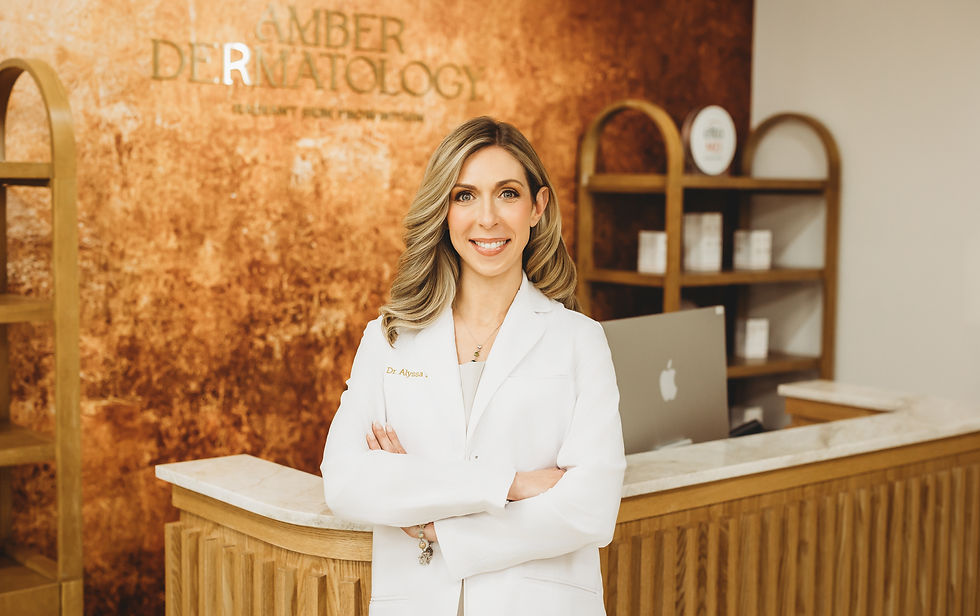
As a dermatologist, I want to offer some reassurance: you almost certainly don't need ten steps! In fact for most people, a 10- step routine can have the opposite effect- often causing irritation which may cause you to have to periodically take breaks from your routine altogether. The best skincare routine isn't the most elaborate one. It's the one you'll actually do, consistently, for years.
The Non-Negotiables
If I had to strip a routine down to its essentials, two products would survive the cut for nearly every patient I see: a gentle cleanser and a broad-spectrum sunscreen.
The cleanser matters less for what it does and more for what it doesn't do. Its job is simply to remove dirt, oil, and the day's buildup without stripping the skin's natural barrier. A harsh, foaming, "squeaky clean" cleanser might feel satisfying in the moment, but that tight, stripped sensation is usually a sign of barrier disruption, and a compromised barrier makes skin more reactive to everything that follows, from sun to actives to plain tap water.
Sunscreen is the step I'd call truly non-negotiable, and it's also the one most people skip. Daily broad-spectrum SPF 30 or higher does more for the visible signs of aging- fine lines, uneven tone, loss of elasticity - than any serum on the market. It's also the single most important thing you can do to reduce your risk of skin cancer. No amount of retinol or vitamin C will undo what unprotected sun exposure does over the course of a decade. If a patient asked me to keep exactly one step and cut everything else, this would be it.
A basic moisturizer rounds out what I think of as the essential three. It's not doing anything particularly glamorous, mostly it's supporting the barrier and making the other two steps more tolerable, especially if you're using anything with active ingredients that can be drying.
The Step Worth Adding
If there's a fourth product that comes close to non-negotiable status, it's a retinoid. This is the best-studied ingredient class we have in dermatology for both aging prevention and acne, and the evidence behind it is substantial, not just marketing claims, but decades of clinical research. Retinoids increase cell turnover, support collagen production, and help regulate the oil and buildup that lead to breakouts. If someone is serious about either concern and wants to add just one active ingredient to their routine, this is where I'd point them.
That said, retinoids are also where routines most often go wrong. They need to be introduced slowly, paired with adequate moisturizer, and never combined carelessly with other actives like exfoliating acids on the same night. I see this constantly: a well-intentioned patient layering a retinoid and a glycolic acid together, wondering why their skin is suddenly red, flaking, and miserable. More is not more here. It's often the opposite.
What's Genuinely Optional
Antioxidant serums, vitamin C being the most common, have real evidence behind them, but it's more modest than what we see with retinoids and sunscreen. They can help with tone and provide some added protection against environmental damage, and if you enjoy using one and your skin tolerates it well, there's no reason to stop. But if a routine needs to be simplified, this is usually the first thing I'd suggest cutting, without much lost.
Beyond that, you're largely in the territory of preference rather than necessity: toners, essences, eye creams, mists, exfoliating pads, sheet masks, sleeping masks, the list goes on. Some of these can be genuinely enjoyable rituals, and I'd never tell a patient to give up something that brings them joy or feels like self-care. But from a clinical standpoint, they're rarely doing meaningful work that the essential steps above aren't already covering. If your routine is starting to feel like a chore, this is exactly the layer to trim. When it comes to exfoliants, I recommend twice weekly, and skip your retinoid that night.
Who Actually Needs a Dermatologist, Not Just a Routine
There's a meaningful difference between wanting general guidance and needing a personalized plan, and oftentimes patients are just following a general “anti-aging” routine when they actually have medical conditions that can be treated to improve their skin tone and texture.
For example, many patients have rosacea, acne or seborrheic dermatitis that can cause their skin to be red, flaky and bumpy. Simply treating those with prescriptions topicals can dramatically improve the appearance of your skin. Anti-aging ingredients can also often trigger or worsen these conditions.
I'd also point to two life stages in particular: postpartum and perimenopause. Hormonal shifts during both periods can change what your skin needs almost overnight — a routine that worked beautifully for years can suddenly stop being enough, or start causing problems it never used to. Patients in these stages often come to me feeling like their skin has become a stranger to them, and usually what they need isn't a longer routine, but a different one, built around what's actually happening hormonally.
And then there's a group I see often: people who've been layering products for years, adding something new every time a new concern or trend appears, without ever really knowing what each product is doing or whether it's helping. If that describes you, a consultation is less about diagnosing a problem and more about editing and figuring out what's actually working, what's fighting with something else in your routine, and what can simply go.
That's the honest pitch for seeing a dermatologist: it's rarely about being told you're doing everything wrong.
More often, a personalized plan ends up being simpler than what you're already doing, because someone with the right training can tell you what to stop, not just what to add.
If your bathroom counter has started to look like a skincare aisle and you're still not sure it's working, that's usually the clearest sign it's time for a real conversation, not another product!


Comments